Choosing the right size mini-split AC unit is essential for ensuring efficient cooling and heating in your home. If the unit is too small, it won't be able to cool or heat the space adequately, resulting in discomfort and higher energy bills. Conversely, if the unit is too large, it will be inefficient and may not dehumidify the air properly.
There are a few factors to consider when determining the size of mini-split AC unit you need. These include the square footage of the space you want to cool or heat, the number of windows and doors, the insulation level of the space, and the climate in your area.
To help you choose the right size mini-split AC unit, we've created a handy size chart. Simply find the square footage of the space you want to cool or heat in the left column, and then find the corresponding unit size in the right column.
Keep in mind that this is just a general guideline. To ensure you get the right size unit for your specific needs, it's best to consult with a qualified HVAC technician.
Air Conditioning Conundrum: Navigating the Mini Split AC Size Chart
 Introduction:In the realm of climate control, mini-split air conditioners have emerged as a formidable force, offering targeted cooling and heating solutions for residential and commercial spaces. Their ability to deliver precise temperature regulation in individual rooms or zones has garnered immense popularity. However, venturing into the world of mini-split ACs often presents a perplexing challenge: determining the appropriate unit size for your space. This comprehensive guide unravels the intricacies of the mini split AC size chart, guiding you toward an informed decision that ensures optimal cooling and heating performance.
Deciphering the Mini Split AC Size Chart:
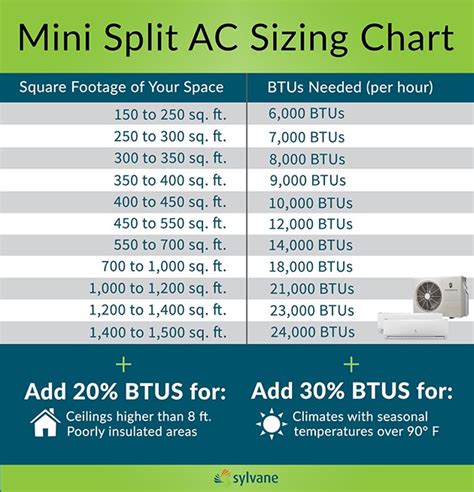 1. BTU: The Quintessential Unit of Measurement: - Embarking on your mini-split AC size selection journey necessitates an understanding of British Thermal Units (BTUs). This fundamental unit quantifies the heat energy absorbed or expelled by an air conditioner. The higher the BTU rating, the greater the unit's cooling or heating capacity.2. Space Dimensions: A Fundamental Consideration: - Prior to delving into the mini split AC size chart, meticulously measure the dimensions of the space you intend to cool or heat. Length, width, and height are crucial parameters, as they collectively determine the cubic footage of the space.3. Insulation and Construction: A Tale of Two Factors: - Insulation plays a pivotal role in determining the appropriate mini-split AC size. Superior insulation minimizes heat transfer, reducing the BTU requirement. Conversely, construction materials like glass and concrete possess higher thermal conductivity, necessitating a larger unit.4. Occupancy and Activities: A Dynamic Duo: - The number of occupants and their activities within the space directly influence the required cooling or heating capacity. Consider the frequency of use, the presence of heat-generating appliances, and the desired comfort level.5. Sun Exposure: A Balancing Act: - Direct sunlight can significantly elevate temperatures, especially during the summer months. South-facing rooms or spaces with large windows may necessitate a higher BTU unit to compensate for the additional heat load.6. Ceiling Height: A Vertical Consideration: - Ceiling height is often overlooked yet plays a crucial role in determining the appropriate mini-split AC size. Higher ceilings require units with increased airflow capacity to circulate air effectively throughout the space.
Consulting an Expert: A Prudent Decision:
 Navigating the intricacies of the mini split AC size chart can be a daunting task. Seeking guidance from a qualified HVAC professional is a wise decision, ensuring that you select a unit perfectly suited to your specific requirements. Their expertise extends beyond mere calculations, encompassing factors like ductwork, installation constraints, and energy efficiency considerations.
Conclusion:
Choosing the correct mini-split AC size is paramount to achieving optimal comfort and energy efficiency. By carefully evaluating space dimensions, insulation, construction materials, occupancy patterns, sun exposure, ceiling height, and consulting an HVAC expert, you can confidently select a unit that delivers the desired cooling or heating performance.FAQs:
1. What is the most crucial factor to consider when selecting a mini-split AC size?Space dimensions, insulation, and occupancy patterns are critical factors to consider when determining the appropriate mini-split AC size.2. How do I calculate the BTU requirement for my space?While DIY BTU calculators are available online, consulting a qualified HVAC professional is highly recommended for accurate calculations that account for factors like insulation, construction materials, and occupancy patterns.3. Can I install a mini-split AC unit myself?While some DIY enthusiasts may attempt self-installation, it is strongly advised to engage the services of a qualified HVAC technician to ensure proper installation, refrigerant handling, and electrical connections.4. How often should I maintain my mini-split AC unit?Regular maintenance is essential for ensuring optimal performance, energy efficiency, and longevity of your mini-split AC unit. Aim for at least one comprehensive maintenance visit annually, preferably before the start of each cooling or heating season.5. What are the key benefits of mini-split AC units?Mini-split AC units offer a plethora of advantages, including targeted cooling and heating, energy efficiency, quiet operation, ease of installation, and flexible zoning capabilities.